
Services
Building Pad Services in Alachua, FL
A slab is only as stable as the ground it sits on. A pad built on buried stumps, wet fill or uncompacted sand will move, and the cracks show up in the first year. North Florida Land Improvements LLC builds house pad construction jobs for homes, garages, shops, metal buildings and sheds, working from Alachua across Alachua, Union, Bradford, Columbia, Suwannee and Levy Counties. We strip the organic soil, set clean fill in compacted lifts, bring the pad to the elevation on your plans, and hand it off ready for your foundation crew. Whether your homesite is near the Santa Fe River or on high ground off US-441, call (352) 756-0010 for a free estimate.
The scope
What House Pad Construction Actually Involves
A house pad is a level, compacted platform of native soil or imported fill on which a foundation is built, and its job is to keep the structure from settling. Work starts with the plans, the flood elevation and, where one exists, the geotechnical report. We then clear the footprint plus a working margin and strip the topsoil and root mat, because vegetation, stumps and roots under a slab decay and leave voids. The subgrade is scarified and proof-rolled to find soft spots before any fill goes down. Clean fill is placed in thin lifts, and each lift is compacted with a roller or plate compactor before the next is added, usually to the density the project's engineer specifies. A testing firm checks density before the footers and the slab, and the pad is then final graded to design elevation with a slope for drainage. Before, you have raw or wooded ground that cannot support a building. After, you have a firm, tested platform at the right elevation and a builder who can start pouring the same week.
Why us
Why Alachua Builders and Homeowners Choose North Florida Land Improvements
We are a family-owned business, and we do our own clearing, grading and pad work, so no one else stands between your plans and the finished ground. Eric Temme bought an established company and its equipment in 2022, and he brings in experienced operators on larger jobs. When a builder calls with a question about the pad, they reach the person who built it.
We build pads to the standards that determine whether they stay put. Alachua County's development review office handles floodplain permits, and a FEMA elevation certificate records the lowest floor elevation so the pad and the building work together. We remove organics because decaying stumps and roots leave voids, we compact in lifts, and we tell you when a soil test is worth the cost. We also flag it when a plan looks off, since a wrong elevation is far cheaper to fix before the fill is placed.
See who we are and how we work, and call when you have plans ready.
Step by step
Our House Pad Construction Process
Confirm the Plans, Elevation and Permits
We start with your foundation plan, the design elevation and any soil report, and we check whether the site lies in a mapped floodplain. In Alachua County, development in a floodplain requires a flood hazard area permit, and an elevation certificate records the elevation of the lowest floor. Setting the pad without these numbers means guessing at the height, which is expensive to correct after the fact.
Clear, Grub and Strip the Footprint
Silt fence goes in first, then we clear the footprint and a margin around it, pull every stump and root, and strip the topsoil and root mat. The Florida Building Code's termite provisions call for vegetation, stumps and dead roots to be removed from the foundation area, including the first foot beyond it. Leaving organics under the pad is the most common cause of later settlement.
Scarify and Proof-Roll the Subgrade
We rough up the surface of the exposed soil before placing fill, since the Florida Department of Environmental Protection's erosion manual notes that fill should go on a scarified surface and not on smooth compacted soil. Then we proof-roll with loaded equipment and watch for soft or pumping spots. Soft areas are dug out and replaced now, when it is cheap, rather than after the slab is poured.
Place and Compact Fill in Lifts
Clean, granular fill goes down in thin layers, and each lift is compacted before the next arrives. A single thick layer looks finished but stays loose underneath. Most engineered pads call for compaction around 95 percent of maximum dry density, though the exact standard is set by the project's geotechnical engineer. We also manage moisture, because soil that is too wet or too dry will not compact.
Test, Final Grade and Hand Off
A testing firm takes density readings across the pad before the footers and again before the slab. We then bring the pad to final elevation, slope it for drainage, and coordinate with your builder on termite treatment, which must be repeated if soil is disturbed afterward. You receive a firm, tested pad at the design elevation, with density reports for your builder and building department.
Where we work
Serving Alachua and the surrounding counties
North Florida Land Improvements LLC builds pads throughout Alachua County, from Alachua and High Springs to Newberry and Archer, and across Union, Bradford, Columbia, Suwannee and Levy Counties. We work for owners in Lake Butler and Starke, for builders in Lake City and Live Oak, and for rural landowners near Williston who want a shed or shop pad. We travel by US-441, SR-235, US-301, I-75 and I-10, and larger jobs take us farther.
Pad elevation matters here. Lots along the Santa Fe River corridor, the Suwannee River and the low ground around Paynes Prairie can fall inside mapped flood zones, and raising a pad with fill changes where water goes on neighboring land. Sandy north Florida soil also means that fill quality and moisture control decide whether a pad holds. We coordinate the design height with your engineer or the county, and we avoid pouring fill into the wet season without a plan for drainage.
From our job sites
Recent jobs
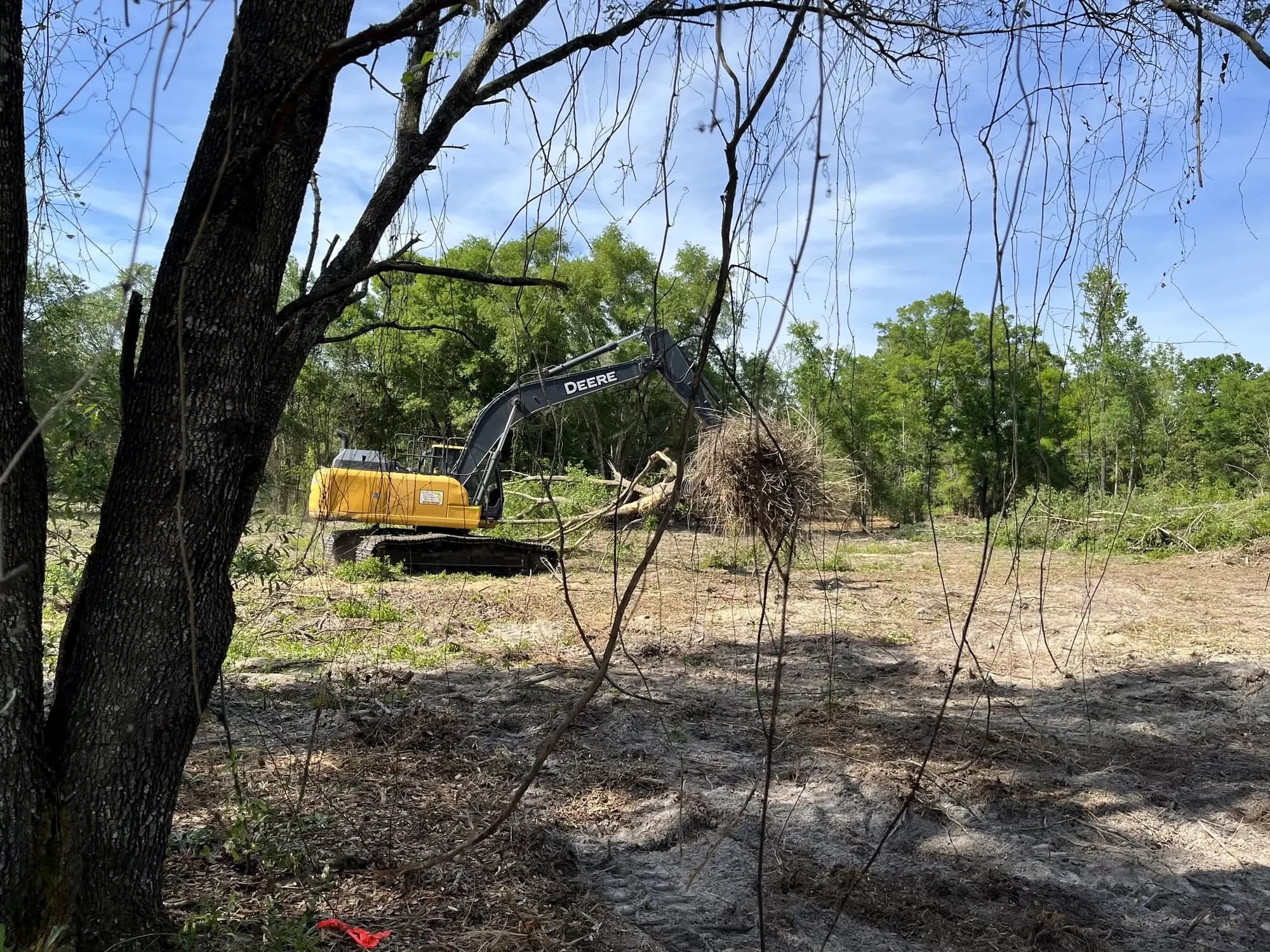
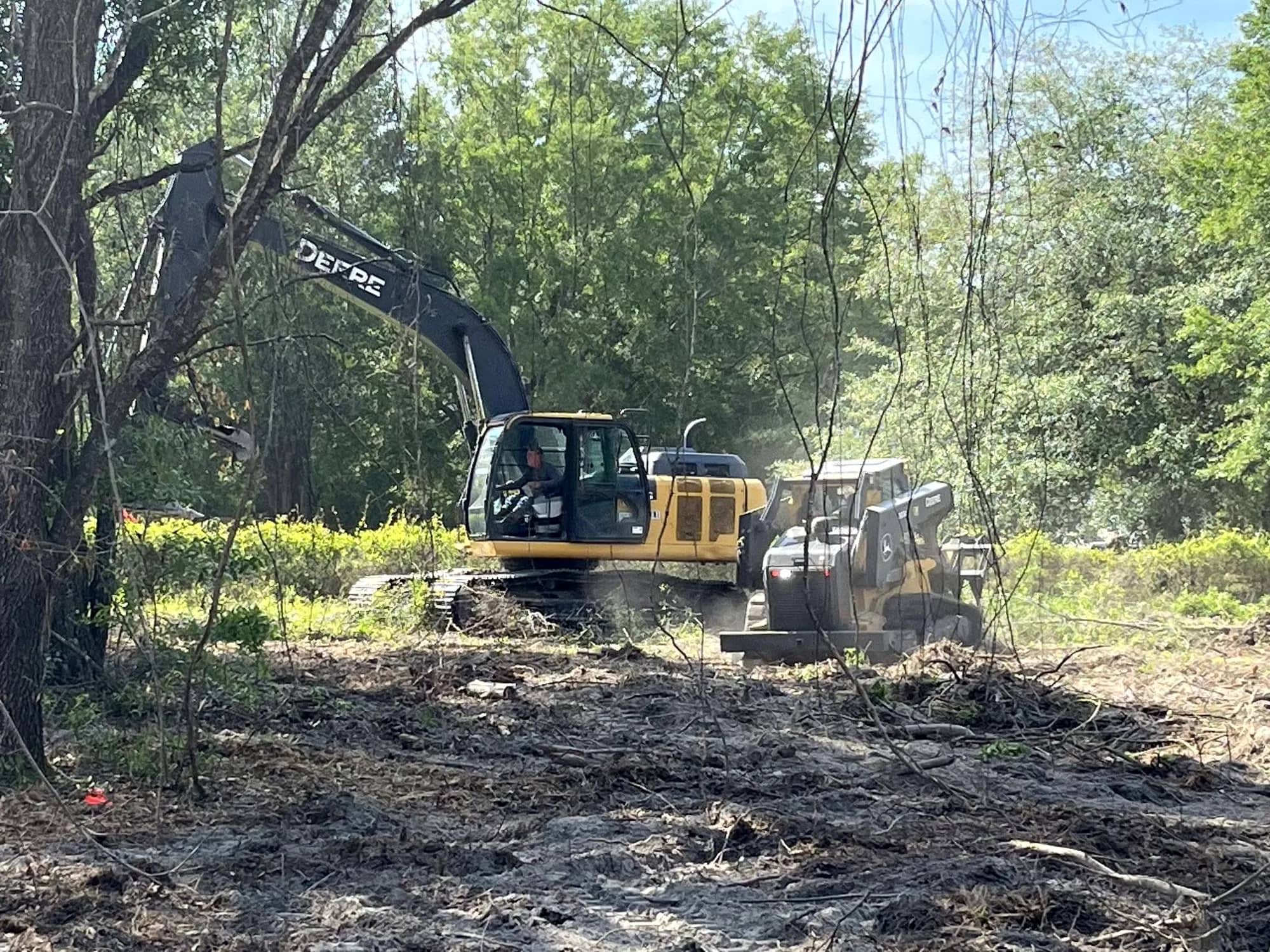
Wooded lot cleared to the tree line 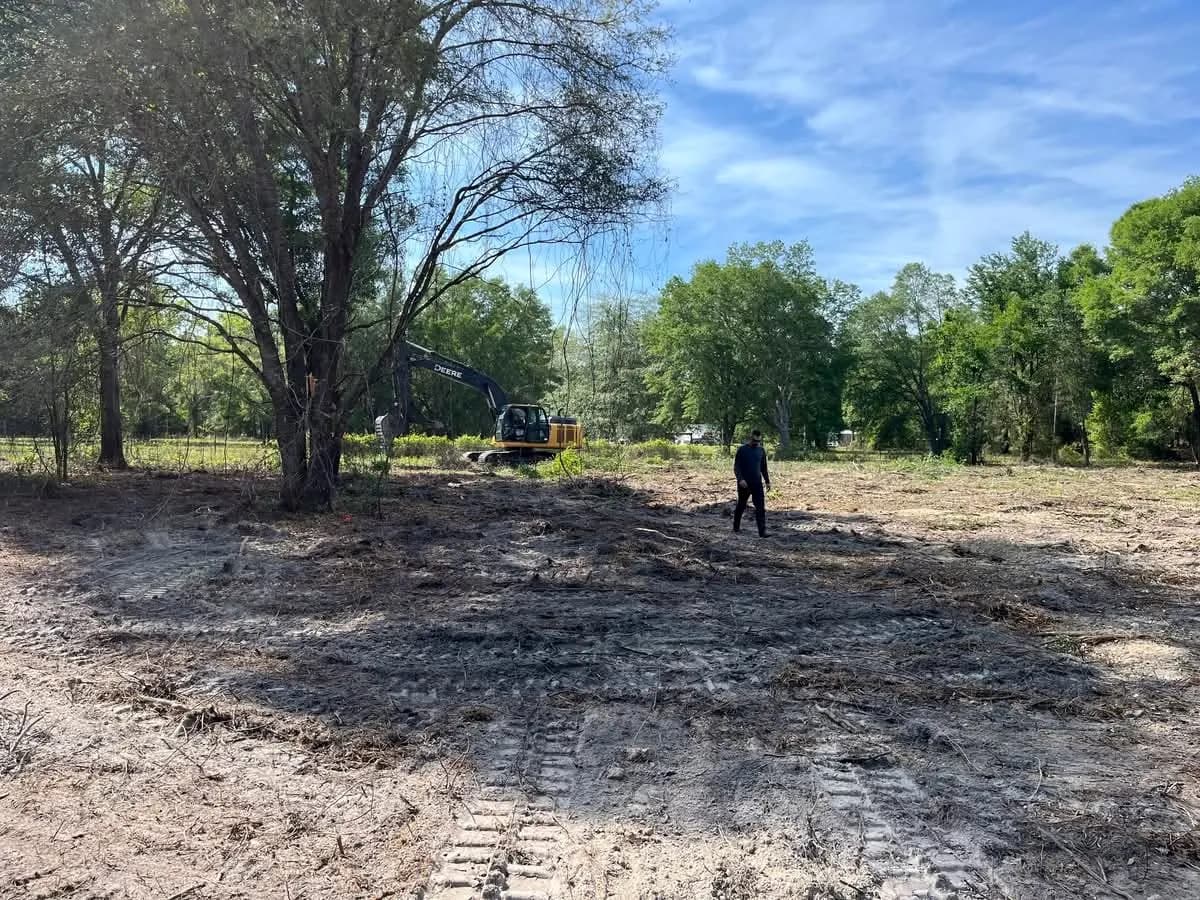
Open ground, good oak kept 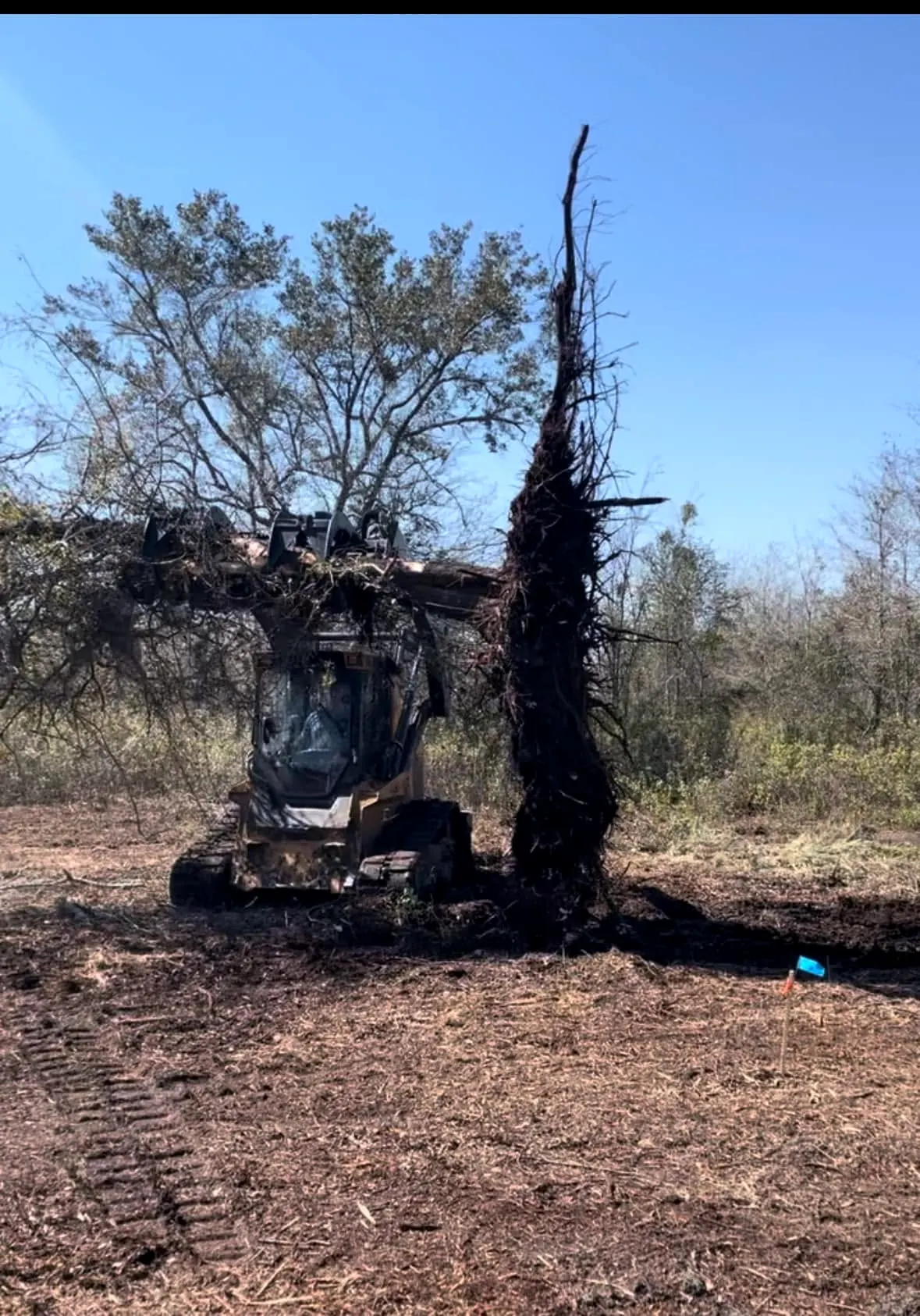
Trees out, roots and all 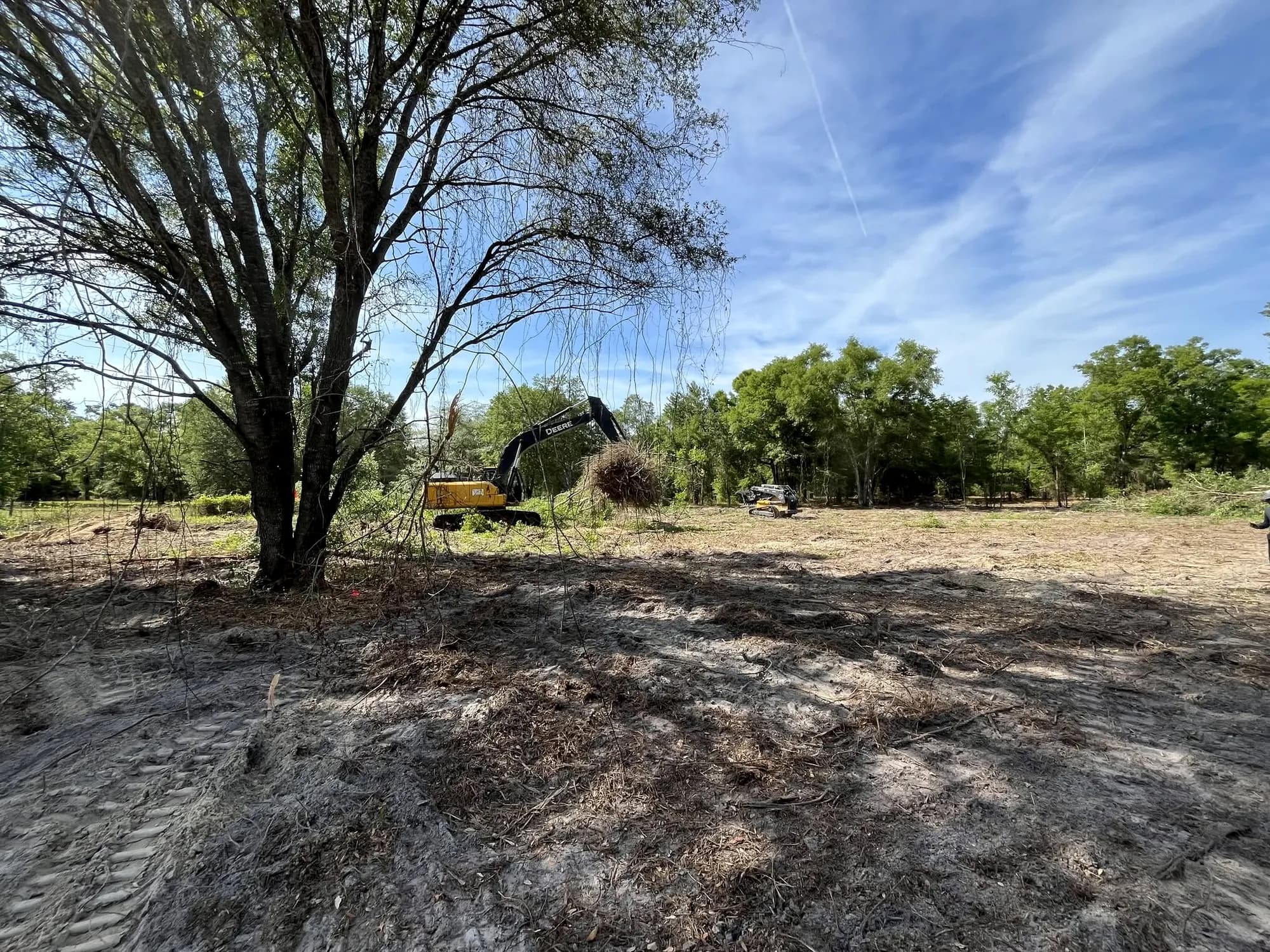
Lot finished edge to edge
Common questions
House Pad Construction FAQs
How much fill do I need for a house pad?
Multiply length by width by depth, all in feet, and divide by 27 to get cubic yards. A 30 by 40 foot pad built up 1 foot needs about 44 cubic yards, and you should add roughly 10 to 15 percent to allow for compaction and settling. Your engineer or plans set the final depth, and we confirm quantities on site.
How long should a house pad settle before building?
There is no fixed waiting period that applies to every pad. A pad that was placed in compacted lifts and passed density testing can usually be built on once it has been inspected. Deep fill, wet fill or poorly compacted fill may need engineer guidance and more time, so follow your engineer's direction.
What compaction does a house pad need?
Most engineered pads call for about 95 percent of maximum dry density, verified by testing. The exact standard is set by your geotechnical engineer or the plans.
Do I need soil testing for a building pad?
Density testing is commonly required before the footers and the slab, and your building department or engineer may require a geotechnical report for the foundation. Testing protects you, because it proves the pad meets the standard before concrete covers it.
Do I need a permit to build up a building pad?
The building permit covers the foundation, but fill in a mapped floodplain needs a flood hazard area permit in Alachua County, and disturbing an acre or more can require state stormwater coverage. Ask your county before raising a pad. We help you check what applies.
Why do stumps and topsoil have to come out from under the pad?
Decaying organics leave voids that let a slab settle and crack, and they attract termites. The building code's termite provisions call for vegetation, stumps and dead roots to be removed from the foundation area.
Keep exploring
Related services
A pad is one part of preparing a site. See our land grading work for drainage and finish grade, or site preparation for the whole sequence from clearing to hand-off. To discuss your build, contact us or call (352) 756-0010 for a free estimate.
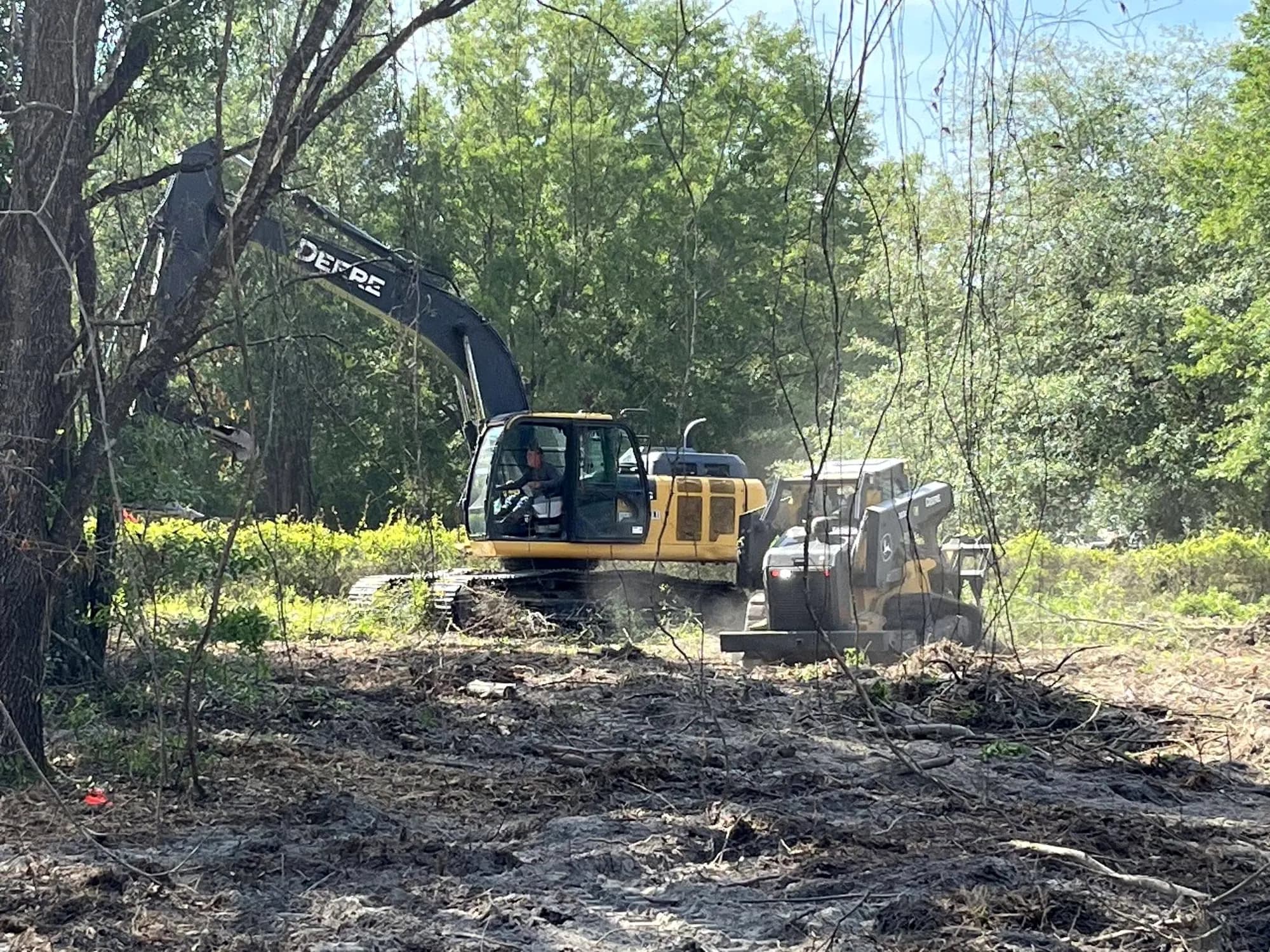
Land Clearing
We remove brush, trees and undergrowth so you can build, farm or reclaim your property, from a single homesite to many acres.
Learn moreSite Preparation
We clear, scrape, grade and laser level your lot so your builder starts on solid, accurate ground.
Learn moreForestry Mulching
One-pass clearing that grinds trees and brush into mulch where they stand, with no burn piles and less soil disturbance.
Learn moreDriveways and Culverts
Gravel driveways built on good grading, a solid base and proper drainage, with culvert pipe where the drive crosses a ditch.
Learn more
Free estimates
Ready to talk about house pads?
Call (352) 756-0010 or request your free estimate, and we will walk the property with you before anything is quoted.
Military and first responder discounts available.