Local expertise
Local Expertise in Alachua County: We Know This Area
Alachua County sits on two very different landscapes. West of the Cody Scarp, thin sandy soil covers a karst plain where sinkholes are most common, including the Mill Creek Sink drainage basin just outside the City of Alachua and the Alachua Sink on the north edge of Paynes Prairie. East of the scarp, the Hawthorn plateau carries more clay and fewer sinkholes. We read that difference on every job, and we know why a cleared, graded lot that drains well on one side of the county can behave very differently on the other.
Our crew works the county's real routes: I-75 at Exit 399 into Alachua, US 441 through downtown Alachua and High Springs, US 27 and US 41 through Newberry and Archer, SR 26 into Newberry, SR 235 north to La Crosse, and the county roads like CR 241 that reach rural lots. We serve homesites and acreage around Alachua, High Springs, Newberry, Archer, Micanopy, Waldo and Hawthorne.
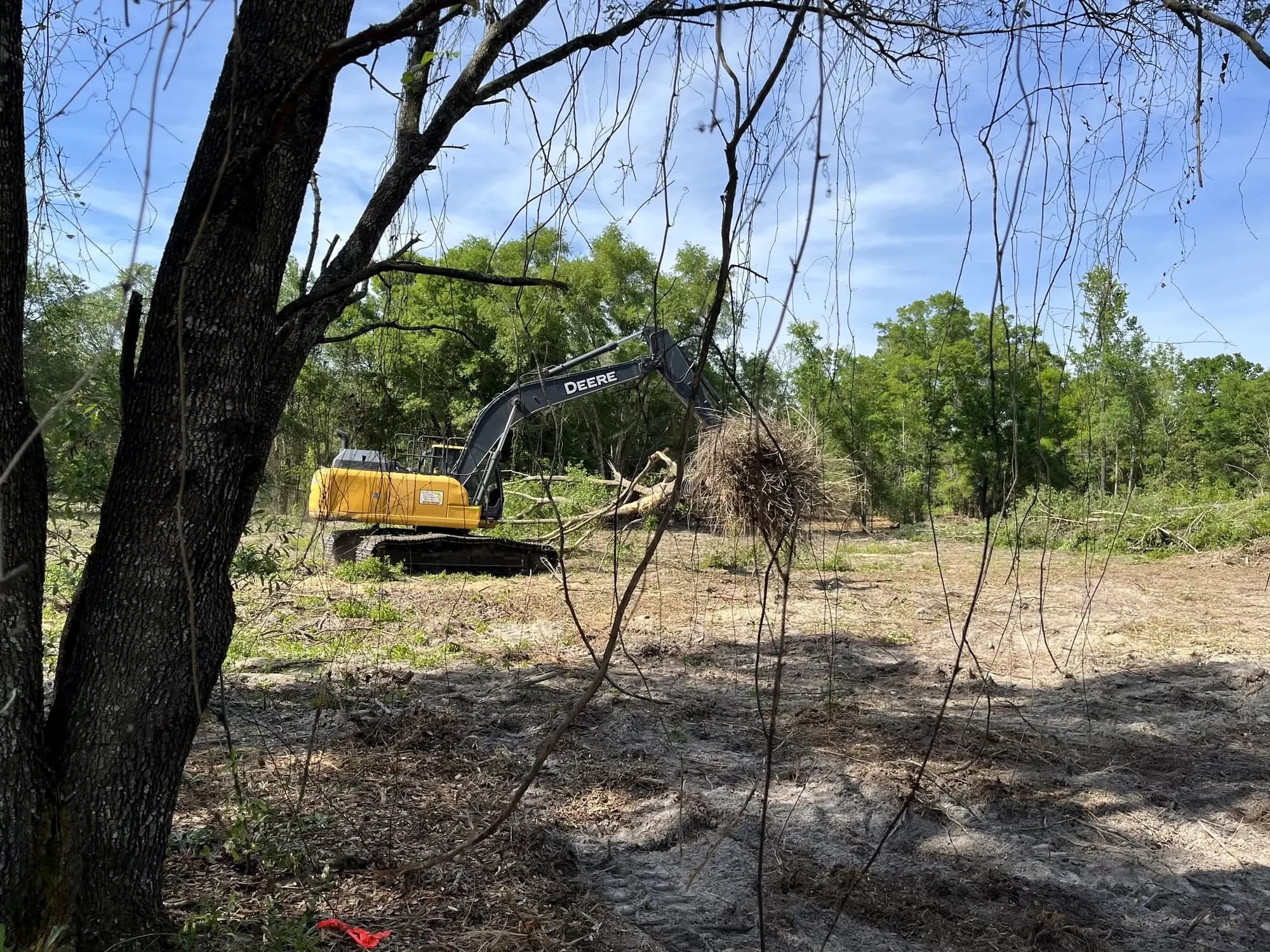
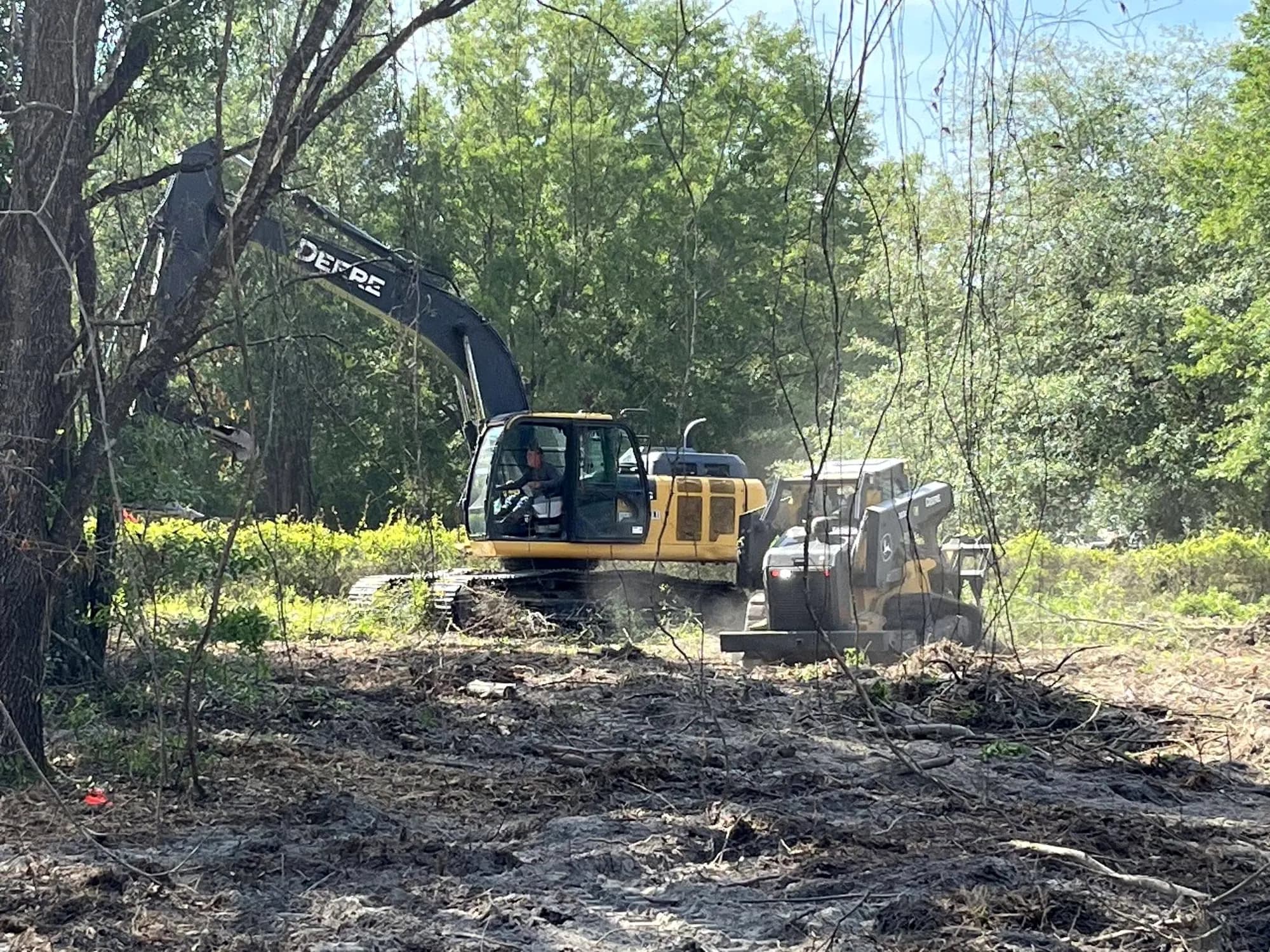
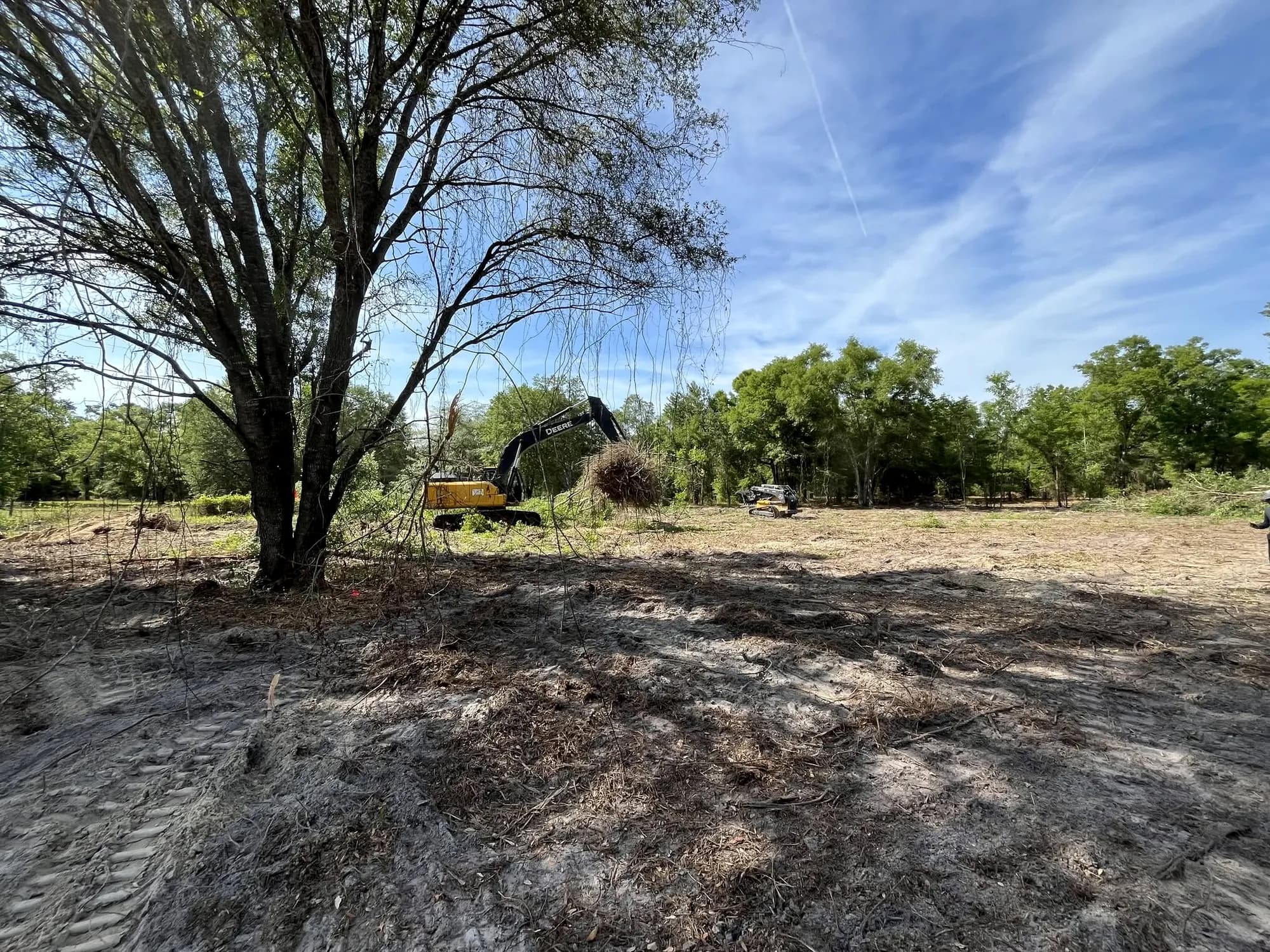
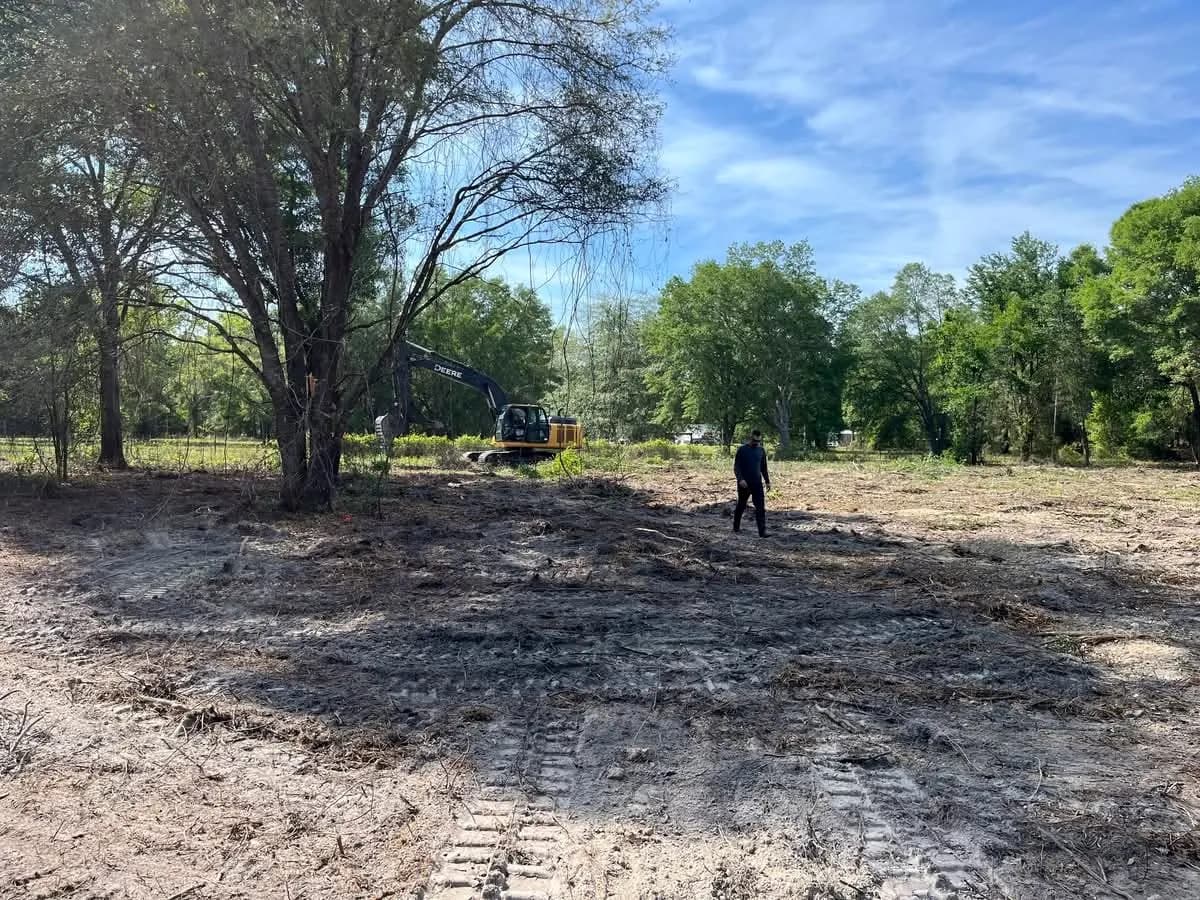
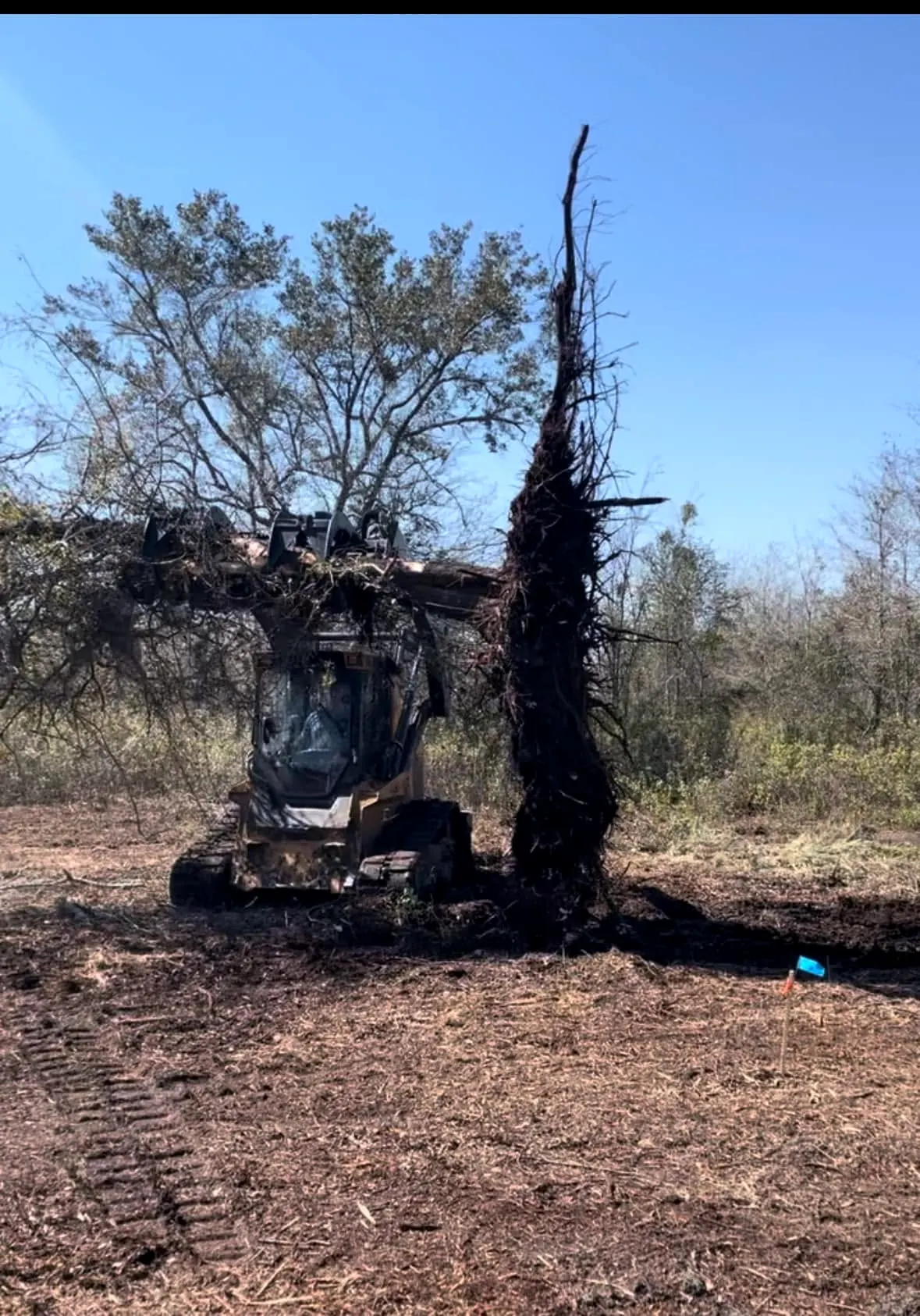
The projects that come up here match the county's growth. Newberry has grown fast and keeps adding neighborhoods and large-lot homesites, the corporate area around Progress Park and San Felasco Parkway draws commercial and industrial sites, and the rural east and north keep landowners busy with pasture, timber and brush. That means house pads, driveways, lot clearing and grading for builders, plus bush hogging and forestry mulching for landowners.
Alachua County also has rules that matter before clearing starts. The unincorporated county requires permits to remove regulated trees, cities like Alachua and High Springs have their own codes, the county is split between the Suwannee River and St. Johns River water management districts, and development in the floodplain needs a county permit. Burning land-clearing debris takes a Florida Forest Service authorization, which is one reason many owners choose forestry mulching. Hurricane season, including the tree damage from Helene in 2024, keeps our schedule busy each fall. We will help you understand what may apply to your parcel, and you should always confirm requirements with the county or city.